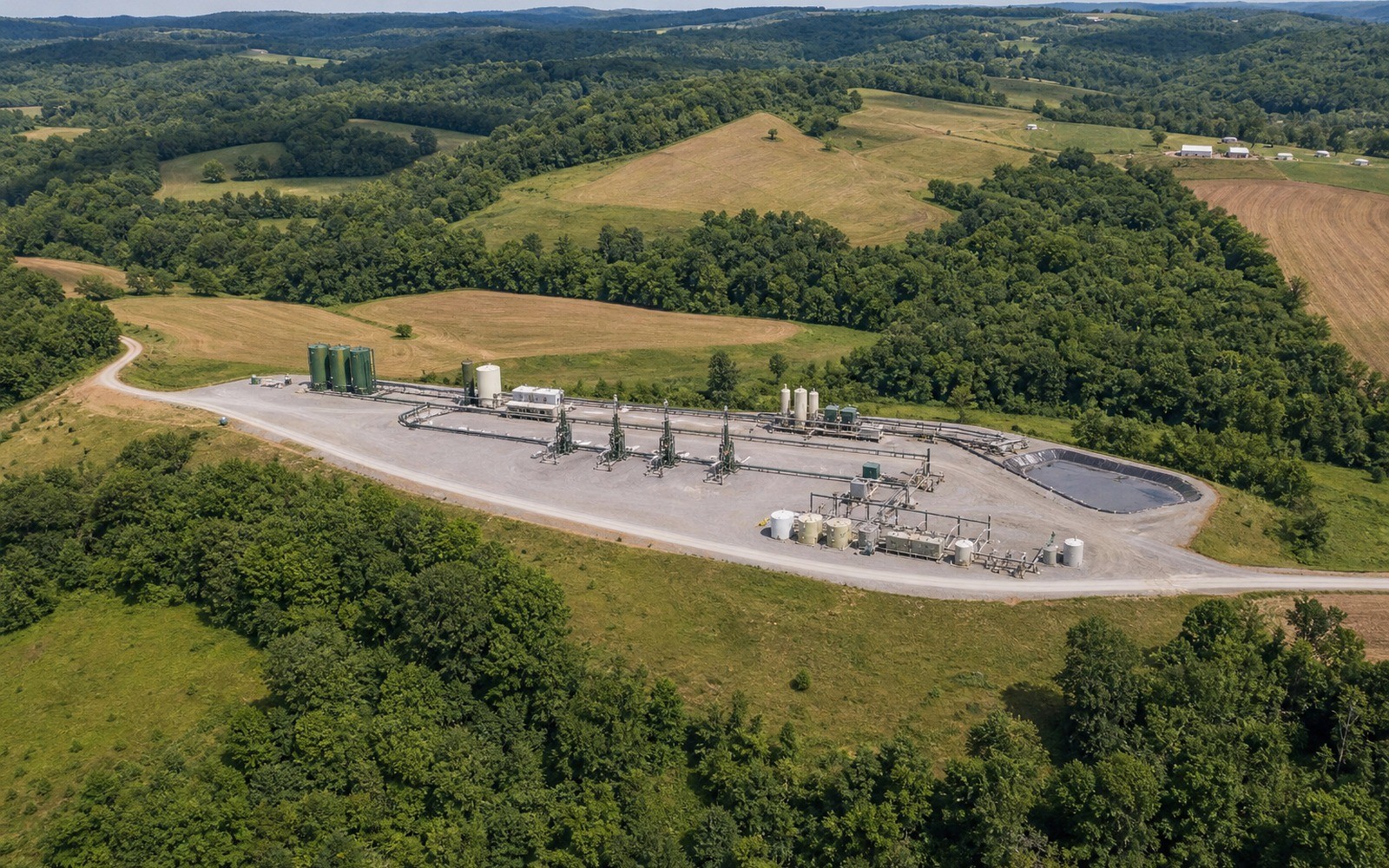
Utica Shale Mineral Rights
The Utica Shale sits deeper than the Marcellus above it, and a lot of people don't realize their minerals could carry rights to both formations rather than just one.
The Utica Shale underlies much of Ohio and extends into parts of Pennsylvania, West Virginia, and New York, sitting below the Marcellus in the same general stack of Appalachian Basin rock. Eastern Ohio counties like Belmont, Monroe, Guernsey, and Carroll have carried the heaviest horizontal Utica development, targeting a formation that's generally deeper and, in Ohio at least, has historically required more intensive completions than the Marcellus above it. Development accelerated through the 2010s alongside the broader Appalachian gas boom, with Ohio in particular becoming the Utica's primary development center.
Like the Marcellus, the Utica splits into windows — a dry gas area, a wet gas window producing valuable natural gas liquids, and in some spots an oil-and-condensate fringe — which means county location and specific formation depth matter as much here as anywhere in Appalachia.
Depth Below the Marcellus Means Two Formations, One Tract
Because the Utica sits underneath the Marcellus across much of its footprint, a single mineral tract can potentially have rights to both formations, developed by different wells at different times, sometimes years apart. It's worth confirming whether your deed and existing lease cover both formations or just one, since older Marcellus-era leases weren't always written with clear language addressing deeper Utica development, which has led to disputes and clarifying negotiations in parts of Ohio and Pennsylvania.
Depth also means Utica wells generally cost more to drill and complete than a shallower Marcellus well on the same pad, which factors into how selective operators are about where they commit to the deeper target even within an otherwise active area.
The Wet Gas Window Has Drawn the Most Investment
Parts of eastern Ohio, particularly around Belmont, Monroe, and Guernsey counties, fall in a wet gas and condensate window where wells produce natural gas liquids alongside methane, which has generally made this the play's most actively developed and highest-value stretch. Further from that core, the Utica shifts toward drier gas, where economics lean more purely on methane pricing without the added NGL revenue, which has tended to draw less aggressive development in recent years.
A Play That Grew Fast, Then Consolidated
Utica development in Ohio expanded rapidly through the early-to-mid 2010s as operators proved out the play's core counties, followed by a period of consolidation where activity concentrated further into the strongest acreage rather than continuing to expand broadly. That pattern is common in maturing shale plays — it doesn't mean the Utica is inactive, but it does mean new drilling today is more selective and concentrated than it was during the initial boom years.
Ohio, Pennsylvania, and West Virginia Regulate Differently
Ohio has its own forced pooling, unitization, and lease requirements that differ from Pennsylvania's and West Virginia's, similar to how the Marcellus varies by state. If your Utica minerals sit near a state line, or you're comparing your situation to someone else's across it, confirming which state's rules apply is worth doing before assuming the comparison holds.
Questions That Can Move the Range
Do you automatically own Utica rights if you own Marcellus rights on the same tract?
Not necessarily — it depends on your specific deed and lease language, since older Marcellus-era leases weren't always written with clear provisions for the deeper Utica formation, which has led to clarifying negotiations in parts of Appalachia.
Why is the wet gas window worth more than the dry gas window?
Wet gas wells produce natural gas liquids alongside methane, adding revenue beyond gas sales alone, which has generally made counties in that window, like Belmont, Monroe, and Guernsey, the most actively developed part of the Utica play.
Is the Utica Shale still being actively drilled?
Yes, though activity has become more concentrated in the strongest acreage since the play's rapid early-2010s expansion, following a pattern common to maturing shale plays.
Does it matter which state your Utica minerals are in?
Yes — Ohio, Pennsylvania, and West Virginia each have their own pooling, unitization, and lease rules, so confirming which state's regulations apply matters when comparing offers or situations across a state line.
Why is the wet gas window considered the play's strongest area?
Wells there produce natural gas liquids in addition to methane, adding a revenue stream beyond gas sales alone, which has generally made counties like Belmont, Monroe, and Guernsey the most actively and consistently developed part of the Utica.
How do you confirm whether your lease covers the Utica as well as the Marcellus?
Reading the recorded lease's granting clause closely, and ideally having it reviewed by an attorney familiar with Appalachian mineral leases, is the most reliable way to see whether deeper formations were explicitly included or left ambiguous.
Is the oil-and-condensate fringe of the Utica worth developing for?
It exists in some spots, but it's been a smaller, less consistently drilled part of the play compared to the wet gas core, so offers there tend to be more conservative unless specific recent activity says otherwise.
Test the next variable in the range
San Juan Basin Mineral Rights
San Juan Basin mineral rights center on decades-old coalbed methane and conventional gas in New Mexico and Colorado. What that maturity means for value.
Piceance Basin Mineral Rights
Piceance Basin mineral rights center on tight gas in the Mesaverde and coalbed methane in Colorado's Garfield and Rio Blanco counties. What's driving value.
Uinta Basin Mineral Rights
Uinta Basin mineral rights in Utah involve waxy crude that needs special handling. See how that logistics quirk, and rail access, shapes value here.
Ask What This Changes in the Range
Describe the property, county and state, interest type, producing status, net acres if known, records available, and the decision the value range needs to support. Or call 307-355-1195.