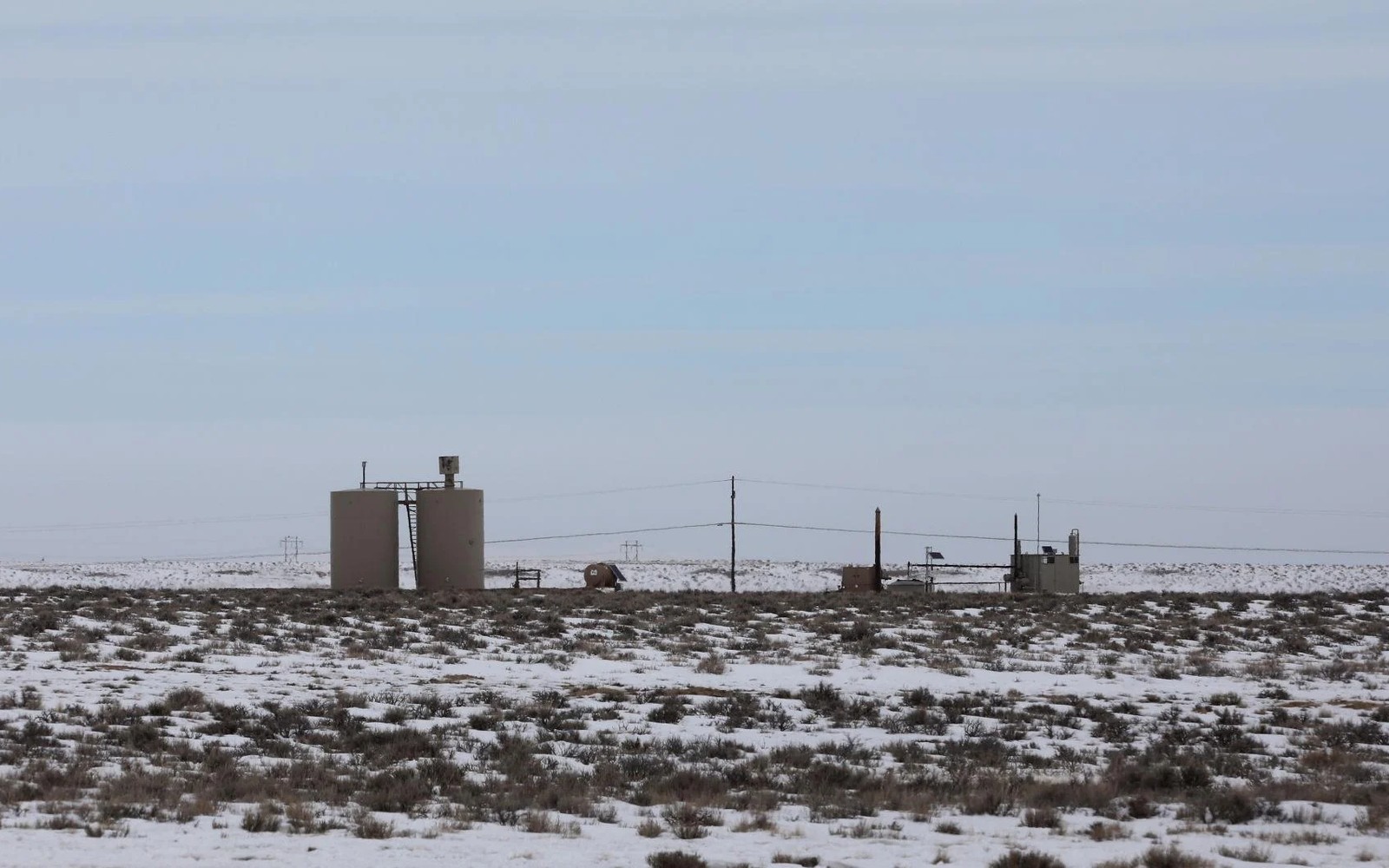
San Juan Basin Mineral Rights
The San Juan Basin has been producing gas for so long that most of what you need to know about its mineral value comes down to a single question: how far along the decline curve is the well on your tract.
Spanning northwest New Mexico and southwest Colorado, the San Juan Basin is one of the oldest major gas-producing basins in the country, with conventional gas development going back to the mid-20th century and a major coalbed methane boom, one of the largest CBM developments anywhere, unfolding through the 1990s. Between conventional Mesaverde and Dakota gas production and Fruitland Coal CBM wells, the basin has tens of thousands of producing and historically producing wells across its footprint.
That long production history means the San Juan Basin today is fundamentally a mature-asset story. New drilling has been limited for years, and most mineral value comes from existing production working through long, often gentle decline curves rather than from speculation on future wells.
One of the Country's Largest Coalbed Methane Fields
The Fruitland Coal formation here supported one of the largest coalbed methane developments in U.S. history, with a dense well count concentrated mainly on the New Mexico side of the basin. CBM wells here, like other coal seam gas, often have flatter, longer decline profiles than shale gas wells once past their initial dewatering phase, which has allowed many original-era wells to keep producing for decades, albeit at modest and declining rates.
Conventional Production Adds Another Layer
Beyond the Fruitland Coal, the San Juan Basin also has substantial conventional gas production from formations like the Mesaverde and Dakota sands, developed over a longer stretch going back to mid-century. A given tract may have multiple wellbores from different eras targeting different formations, which means understanding your minerals here sometimes requires checking several separate well records rather than a single producing well.
Very Limited New Drilling in Recent Years
With the basin's productive fairways largely developed decades ago and gas prices not consistently supporting new investment in a mature play like this, new permitting activity has been minimal for an extended period. Offers on undeveloped or lightly developed San Juan Basin acreage tend to reflect that reality, generally running conservative compared to actively drilled basins, unless there's a specific, recent signal of renewed interest in a particular area.
New Mexico and Colorado Regulate Some Things Differently
Because the basin crosses the state line, New Mexico and Colorado have their own distinct rules around pooling, spacing, and royalty practices. If you're comparing your situation to a neighbor's minerals on the other side of the state line, it's worth confirming that you're comparing similar regulatory and lease circumstances, since state-level differences can affect outcomes even for geologically similar tracts.
What a Realistic Offer Looks Like Here
For a producing San Juan Basin tract, expect an offer built off trailing income and a conservative reserve-life estimate given how mature most of the play's production is at this point. For undeveloped or lightly developed acreage, offers tend to be modest, reflecting how limited new permitting has been across most of the basin in recent years. Neither situation should be compared directly to an actively expanding play elsewhere in the country, since the San Juan's development story is fundamentally a different, later stage of a basin's life.
Questions That Can Move the Range
Is the San Juan Basin still an active drilling area?
New drilling has been minimal for years. Most current activity involves long-established wells producing along mature decline curves rather than significant new permitting.
Why do San Juan Basin wells keep producing for so long?
Both the Fruitland Coal coalbed methane wells and much of the conventional production here tend to have flatter, longer decline profiles once past their initial years, which is why so many original-era wells are still producing decades later, just at modest rates.
Your tract has more than one well — how do you know what you own?
Given the basin's long, layered development history across multiple formations and eras, it's common for a single tract to have several separate wellbores; checking individual well records for each is more reliable than assuming one covers everything.
Do New Mexico and Colorado handle San Juan Basin minerals the same way?
Not entirely — the two states have their own pooling, spacing, and royalty rules, so it's worth confirming which state's regulations apply to your specific tract before comparing offers across the state line.
Is there any new drilling happening in the San Juan Basin at all?
Activity is limited but not entirely absent — occasional recompletions or workovers on existing wells happen more often than genuinely new wellbores, so it's worth checking specific, recent permit history rather than assuming the basin is fully static.
What documents help establish what you actually own here?
Your recorded deed, any lease or division order, and recent royalty statements together establish your net mineral acres and royalty fraction, which matters given how many different formations and eras of development can layer onto a single San Juan Basin tract.
Test the next variable in the range
Piceance Basin Mineral Rights
Piceance Basin mineral rights center on tight gas in the Mesaverde and coalbed methane in Colorado's Garfield and Rio Blanco counties. What's driving value.
Uinta Basin Mineral Rights
Uinta Basin mineral rights in Utah involve waxy crude that needs special handling. See how that logistics quirk, and rail access, shapes value here.
Barnett Shale Mineral Rights
The Barnett Shale launched the shale gas era and is now a mature play. Here's how that maturity, not hype, shapes what mineral rights there are worth today.
Ask What This Changes in the Range
Describe the property, county and state, interest type, producing status, net acres if known, records available, and the decision the value range needs to support. Or call 307-355-1195.